
Kidney Stones: Causes, Symptoms, and Effective Treatment Options
Kidney stones are a common urological condition that can cause intense pain and discomfort if not treated on time. They form when minerals and salts in the urine crystallize and harden inside the kidneys. Kidney stones can affect people of any age and may recur if preventive care is ignored.
Early diagnosis and timely medical care are essential to avoid complications such as urinary blockage or kidney damage. Consulting a Urologist in Nagpur ensures accurate evaluation and a personalized treatment plan.
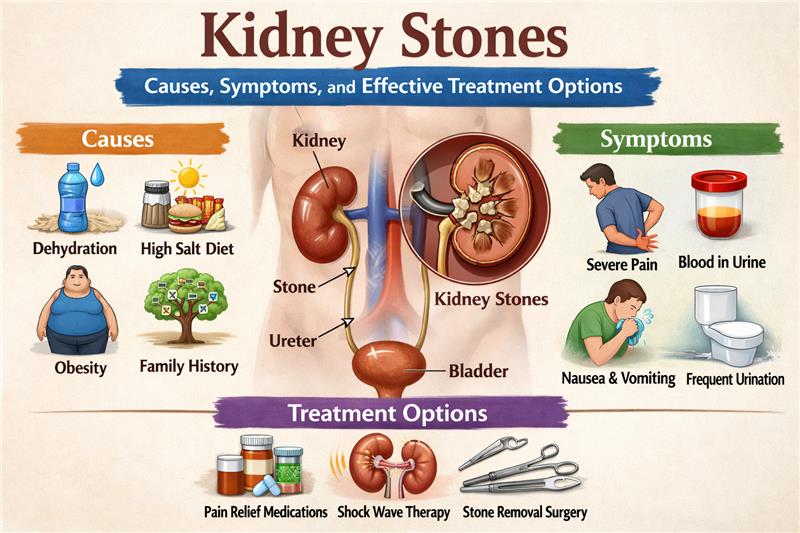
What Are Kidney Stones?
Kidney stones, also known as renal calculi, are hard deposits formed from substances such as calcium, oxalate, uric acid, or cystine. These stones may remain in the kidney or move into the urinary tract, causing severe pain and urinary symptoms.
Small stones may pass naturally through urine, while larger stones often require medical or procedural intervention.
Types of Kidney Stones
Kidney stones are classified based on their composition:
Calcium Stones
The most common type, often linked to dehydration, high salt intake, and dietary factors.
The most common type, often linked to dehydration, high salt intake, and dietary factors.
Uric Acid Stones
Form when urine becomes acidic, commonly seen in people consuming a high-protein diet.
Form when urine becomes acidic, commonly seen in people consuming a high-protein diet.
Struvite Stones
Associated with recurrent urinary tract infections and may grow rapidly.
Associated with recurrent urinary tract infections and may grow rapidly.
Cystine Stones
Rare stones caused by genetic disorders affecting amino acid metabolism.
Identifying the stone type helps guide treatment and prevent recurrence.
Rare stones caused by genetic disorders affecting amino acid metabolism.
Identifying the stone type helps guide treatment and prevent recurrence.
Symptoms of Kidney Stones
Symptoms depend on stone size and location. Common signs include:
- Severe pain in the side, back, or lower abdomen
- Pain radiating toward the groin
- Burning sensation during urination
- Frequent urge to urinate
- Blood in urine
- Nausea and vomiting
- Fever and chills if infection is present
Sudden or severe pain requires immediate medical attention.
Causes and Risk Factors
Several factors increase the risk of kidney stone formation:
- Low water intake
- Excess salt and protein consumption
- Family history of kidney stones
- Obesity
- Digestive disorders
- Recurrent urinary infections
- Certain medications
Understanding these causes helps in long-term prevention.
Diagnosis of Kidney Stones
Proper diagnosis is important before starting treatment. Common investigations include:
- Urine examination
- Blood tests
- Ultrasound
- CT scan or X-ray
- Stone analysis (if passed naturally)
A Urologist in Nagpur uses these tests to assess stone size, location, and composition.
Treatment Options for Kidney Stones
Treatment depends on the size, type, and symptoms of the stone:
Conservative Management
Small stones may pass naturally with:
Small stones may pass naturally with:
- Increased fluid intake
- Pain-relief medications
- Medicines to relax the urinary tract
Medical Treatment
Certain medications help dissolve specific stone types and reduce recurrence risk.
Minimally Invasive Procedures
For larger or stuck stones, advanced options include:
- Shock wave lithotripsy (ESWL)
- Ureteroscopy
- Percutaneous nephrolithotomy (PCNL)
These methods provide effective Kidney stone treatment in Nagpur with minimal recovery time.
Complications of Untreated Kidney Stones
If kidney stones are ignored, they can lead to:
- Urinary obstruction
- Recurrent infections
- Kidney swelling
- Permanent kidney damage
Early treatment helps prevent these serious complications.
Prevention of Kidney Stones
Preventive care is essential, especially for patients with recurrent stones:
- Drink sufficient water daily
- Reduce salt intake
- Maintain a balanced diet
- Avoid excess protein consumption
- Follow medical advice after treatment
Adopting healthy habits significantly lowers the risk of recurrence and supports long-term kidney health.
When Should You See a Specialist?
Medical consultation is advised if:
- Pain is severe or persistent
- Blood appears in urine
- Fever develops
- Stones recur frequently
- Urination becomes difficult
Timely evaluation ensures effective Kidney stone treatment in Nagpur and prevents long-term complications. Consulting a Urologist in Nagpur helps ensure safe and appropriate care.
Frequently Asked Questions (FAQs)
1. Are kidney stones serious?
Small stones may pass naturally, but larger stones can cause severe pain and complications if untreated.
2. Can kidney stones recur?
Yes, recurrence is common without preventive measures and lifestyle changes.
3. Is surgery always required?
No, many kidney stones can be treated without surgery depending on size and location.
4. How long does treatment take?
Treatment duration varies from a few days to a few weeks based on the method used.
5. Can diet help prevent kidney stones?
Yes, proper hydration and dietary control play a major role in prevention.
Author
Dr. Chaitanya Deshmukh
Consultant Urologist, Andrologist and Kidney Transplant Surgeon in Nagpur
Consultant Urologist, Andrologist and Kidney Transplant Surgeon in Nagpur