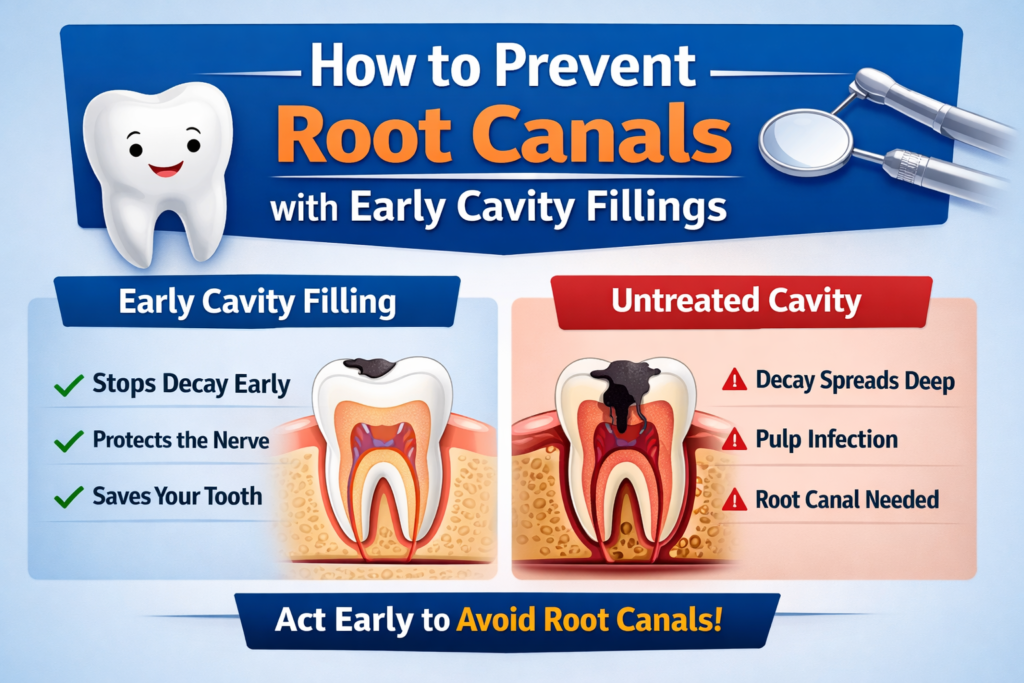
How to Prevent Root Canals with Early Cavity Fillings
Tooth problems often start small and silent, but they can grow into serious pain if ignored. One of the most common dental issues is tooth decay, which can slowly damage a tooth from the outside to the inside. Many people do not realize that a simple cavity filling, when done early, can help avoid painful treatments like root canals. Visiting the
Best Dentist in Hinjawadi at the right time can make a big difference in protecting natural teeth and preventing complex dental procedures.
Early cavity treatment is not about urgency or fear—it is about understanding how decay works and acting before it becomes severe. This blog explains how early cavity fillings help prevent root canals, how tooth decay progresses, warning signs to watch for, and how simple habits can protect long-term oral health.
Understanding What a Cavity Really Is
A cavity is a small hole or damaged area in a tooth caused by tooth decay. Decay begins when plaque, a sticky layer of bacteria, builds up on the teeth. These bacteria feed on sugar from food and drinks and produce acid. Over time, this acid weakens the hard outer layer of the tooth, called enamel.
At first, a cavity may not cause pain. Many people delay treatment because they feel fine. However, decay does not stop on its own. Without treatment, it continues to move deeper into the tooth, affecting inner layers and increasing the risk of infection.
How Tooth Decay Progresses Step by Step
To understand why early cavity fillings are important, it helps to know how decay develops.
1. Enamel Damage
This is the earliest stage. Acid attacks weaken the enamel, causing tiny white or brown spots. At this point, damage may be reversed with good oral care.
2. Formation of a Cavity
When enamel breaks down, a small hole forms. This is when a filling is usually needed. Pain may still be absent or mild.
3. Dentin Infection
Below the enamel is dentin, a softer layer. Once decay reaches dentin, sensitivity to hot, cold, or sweet foods increases.
4. Pulp Involvement
The pulp contains nerves and blood vessels. Infection here causes strong pain and swelling. A root canal is often required at this stage.
5. Severe Infection or Abscess
If left untreated, infection can spread beyond the tooth, sometimes leading to tooth loss or more serious health issues.
Early cavity fillings stop decay in stages 2 or early stage 3, before the pulp is affected.
What Is a Root Canal and Why It Happens
A root canal is a dental procedure done when the pulp inside the tooth becomes infected or damaged. During the treatment, the infected pulp is removed, the inner space is cleaned, and the tooth is sealed.
Root canals are usually needed because of:
- Deep untreated cavities
- Cracked or broken teeth
- Long-term decay reaching the nerve
While root canal treatment helps save a tooth, it is more complex than a filling and can often be avoided with early care.
How Early Cavity Fillings Prevent Root Canals
Early cavity fillings act as a protective barrier. When decay is removed early, bacteria cannot reach the pulp. This prevents infection, inflammation, and nerve damage.
Here is how early fillings help:
- Stop decay from spreading deeper
- Protect the tooth nerve
- Maintain natural tooth strength
- Reduce long-term dental problems
By treating cavities early, the tooth remains alive and healthy, making root canal treatment unnecessary in most cases.
Signs That a Cavity Needs Attention Early
Many cavities do not cause pain at first. Knowing the warning signs helps people seek care before problems worsen.
Common Early Signs
- Mild sensitivity to hot or cold
- Sensitivity to sweet foods
- Rough or sticky feeling on a tooth
- Small dark spots on teeth
- Occasional discomfort while chewing
Ignoring these signs allows decay to progress. Early dental visits help catch cavities before pain starts.
Why Waiting Makes Dental Problems Worse
Delaying cavity treatment increases the risk of complications. A small cavity can quickly grow, especially if oral hygiene is poor or sugar intake is high.
Problems caused by delay include:
- Deeper infection
- Increased pain and sensitivity
- Higher chance of root canal treatment
- Weakened tooth structure
- Risk of tooth fracture
Early fillings are simpler and help avoid long-term dental stress.
How Cavity Fillings Protect Natural Teeth
Natural teeth are always better than artificial replacements. Cavity fillings help keep teeth strong by restoring damaged areas.
Benefits of early fillings include:
- Preserving the natural tooth
- Preventing bacteria buildup
- Restoring normal chewing function
- Maintaining proper tooth alignment
Protecting natural teeth early supports better oral health over time.
Types of Cavity Fillings Used Today
Modern dentistry offers different filling materials, chosen based on location, size of cavity, and patient needs.
Common Filling Types
- Tooth-colored composite fillings
- Glass ionomer fillings
- Ceramic or porcelain fillings
These materials are designed to blend naturally with teeth and provide long-lasting protection when placed early.
The Role of Regular Dental Checkups
Regular dental visits help detect cavities before symptoms appear. Many early cavities are found during routine examinations or X-rays.
Benefits of regular checkups:
- Early detection of decay
- Simple treatment options
- Reduced risk of infection
- Better long-term oral health
Preventive care plays a major role in avoiding root canals.
Oral Habits That Help Prevent Cavities
Daily habits strongly influence tooth health. Small changes can greatly reduce the risk of cavities.
Healthy Habits to Follow
- Brush twice daily with fluoride toothpaste
- Floss once a day
- Limit sugary snacks and drinks
- Rinse mouth after meals
- Drink enough water
Good habits slow down plaque buildup and protect enamel.
Diet and Its Impact on Tooth Decay
What people eat affects their teeth. Sugary and acidic foods increase the risk of cavities.
Foods that increase decay risk:
- Sugary sweets
- Soft drinks
- Sticky snacks
- Frequent snacking
Healthier choices like fruits, vegetables, and dairy products help strengthen teeth and reduce acid exposure.
Children and Early Cavity Treatment
Cavities are common in children, especially in baby teeth. Early fillings are important even for temporary teeth.
Why early treatment matters for children:
- Prevents pain and infection
- Helps proper speech and chewing
- Protects developing permanent teeth
Early dental care supports lifelong oral health habits.
Adults and Silent Tooth Decay
Adults often ignore early signs due to busy schedules. However, decay can worsen without obvious pain.
Common adult risk factors:
- Gum recession
- Old fillings wearing out
- Dry mouth
- High sugar intake
Regular monitoring helps prevent sudden dental emergencies.
Can Cavities Heal on Their Own?
Once a cavity forms, it cannot heal naturally. Only very early enamel damage can be managed with good oral care.
When a hole forms, professional treatment is needed to stop decay from spreading. Early cavity fillings are the most effective solution.
The Long-Term Value of Early Treatment
Early dental care is not about urgency—it is about prevention. Filling a cavity early reduces future complications and helps maintain comfort while eating, speaking, and smiling.
Long-term benefits include:
- Fewer dental procedures
- Lower risk of infections
- Stronger natural teeth
- Improved overall oral health
Final Thoughts
Preventing root canals begins with understanding tooth decay and taking action early. Small cavities may seem harmless, but they can grow quickly if ignored. Early cavity fillings protect the tooth, prevent infection, and help maintain natural oral function. Choosing timely care with the
Best Dentist in Hinjawadi supports long-term dental health and helps avoid complex treatments later in life.
FAQ